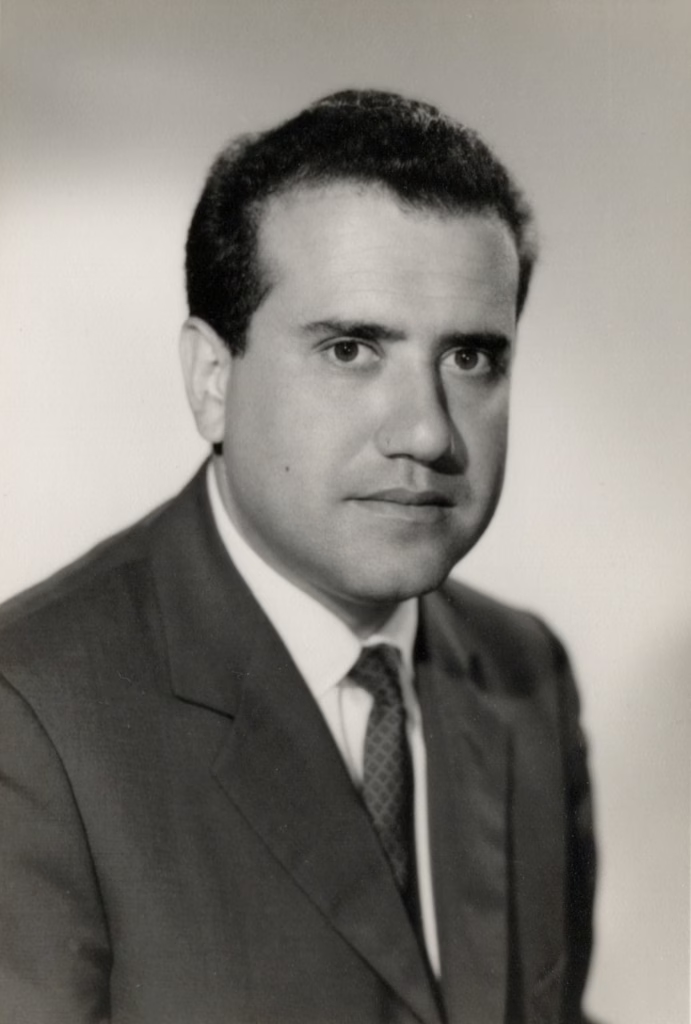
Canarian jurist, leading figure in the Tenerife forum and defender of European constitutionalism and the Spanish parliamentary monarchy, who practiced law in the city of Santa Cruz de Tenerife from 1953 to 2004. He left a legacy of diaries and personal letters, along with multiple conversations with personalities of his time.
Early Life
Manuel Méndez Fernández was born in Hermigua, La Gomera, on December 30, 1926, into a family deeply rooted in the island’s history. Son of don Domingo Méndez Suárez and doña Camila Fernández Pérez, he descended on his father’s side from the Marichal family, a lineage of Norman origin settled in La Gomera since the sixteenth century and linked for generations to the defence of the island as captains of militias.
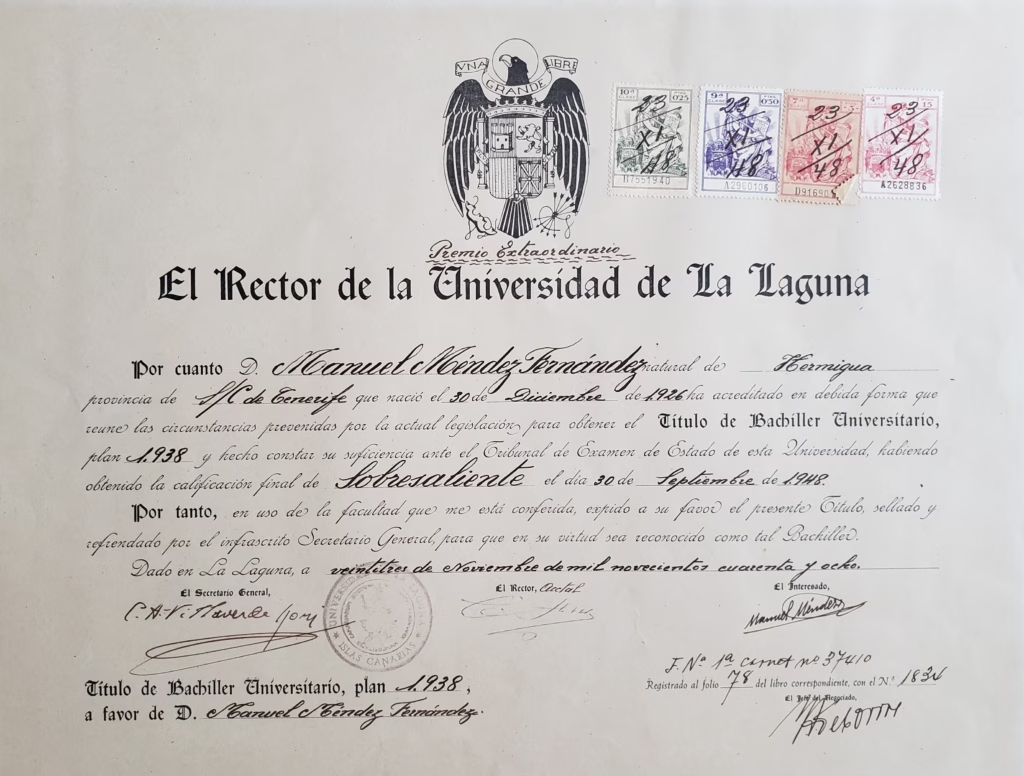
His youth was spent in San Cristóbal de La Laguna, where the family lived on Nava y Grimón Street, next to the Cristo de La Laguna. He studied at the Instituto de Canarias, obtaining in 1948 the Extraordinary Prize in the State Exam.
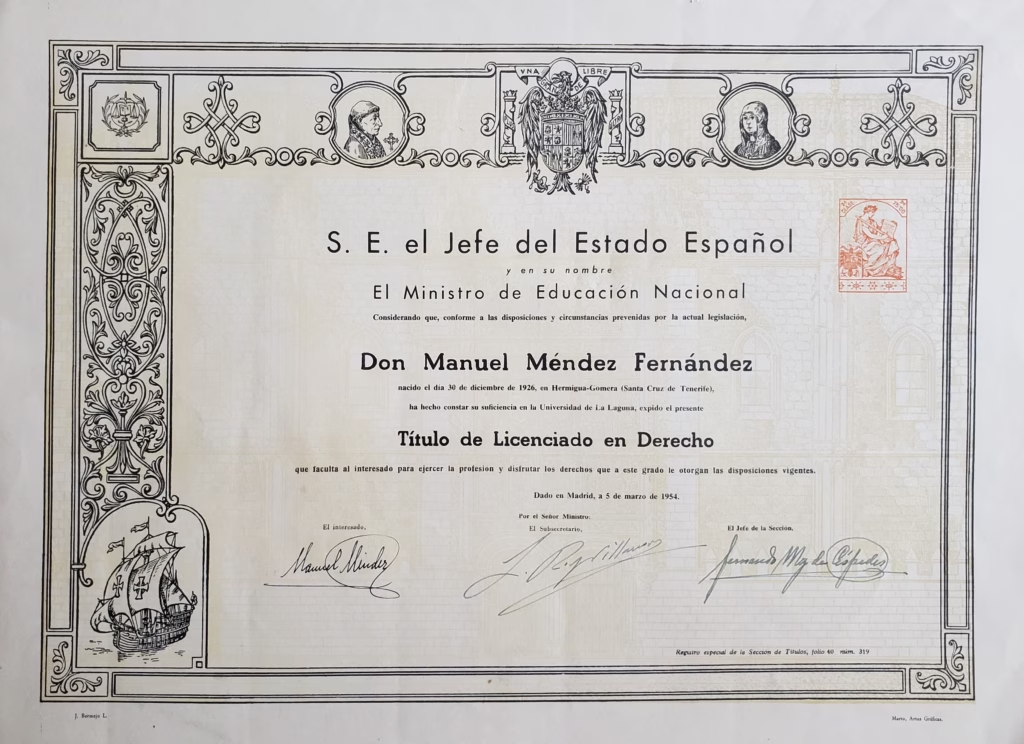
In 1952 he completed his military service as a reserve second lieutenant in the Tenerife Infantry Regiment. A year later, in 1953, he graduated in Law from the University of La Laguna, where he was a distinguished student of Don Manuel Gitrama González, Professor of Civil Law, and Don José Peraza de Ayala y Rodrigo‑Villabriga, Professor of the History of Spanish Law, Roman Law, and Canon Law. His end‑of‑degree trip to Paris, which included a visit to the Faculty of Law at the Sorbonne, awakened in him a lasting interest in European constitutionalism and in the democratic models then in force across Europe.
Professional life
After completing his studies, he settled with his family in Calle del Castillo in Santa Cruz de Tenerife and opened his first law office in the Plaza de Santo Domingo. The death of his father in 1954 marked those first years of practice. In 1959 he passed the competitive examinations for the civil service in the Department of Pensions in Madrid.
During five decades of dedication to Law, Méndez Fernández practiced with care and prudence. Among his firmest convictions, he highlighted the defence of the parliamentary monarchy, which he considered the most appropriate political form to guarantee the historical continuity of Spain and the stability of its institutions. The appointment of don Juan Carlos de Borbón as Prince of Asturias in 1969 confirmed for him that the country was moving towards a horizon of constitutional parliamentary monarchy.
To this conviction were added others that he maintained with equal clarity: the need for democratic reform during the Spanish Transition, the validity of Christian democracy as an ethical inspiration, the integration of the Canary Islands into the European Union and the progress of La Gomera through education. He kept diaries and correspondence where he recorded these reflections, written with the serenity of someone who thinks before speaking and listens before judging. He frequently attended gatherings, where he was appreciated for his leisurely conversation, his historical memory and his cordiality.
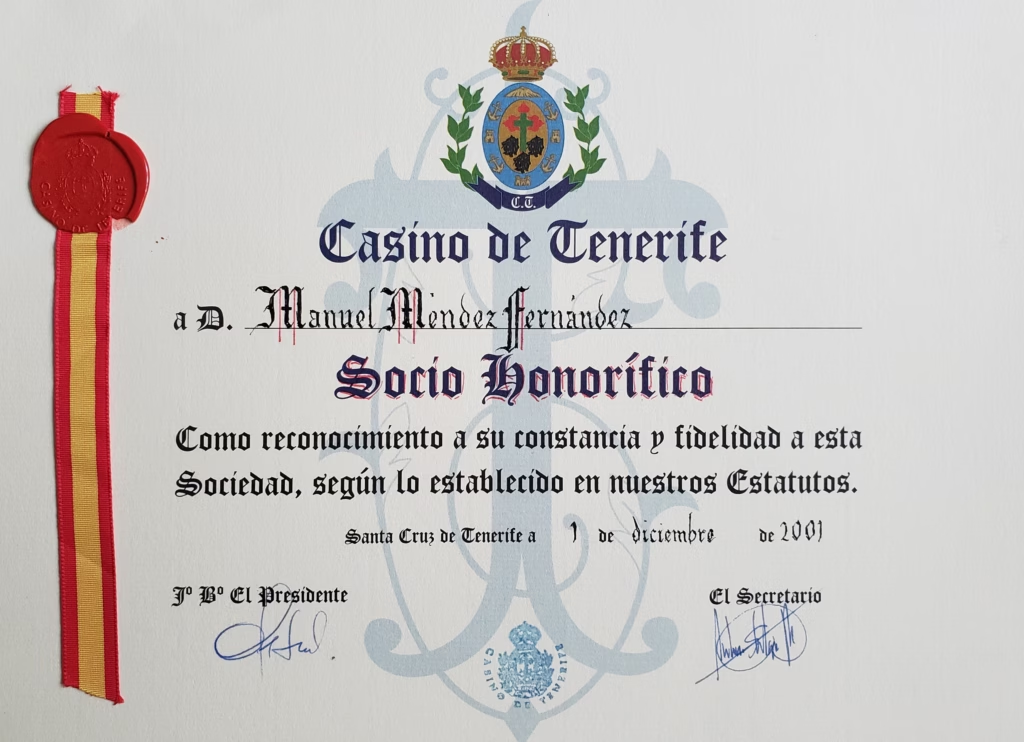
In 1976 he moved his office to Bethencourt Alfonso Street, where he continued to practice law until his retirement. On 1 December 2001 he was named an honorary member of the Real Casino de Tenerife. Those who met him there remembered his way of reasoning without ambiguity, with a clarity that was born of experience and of a life lived with meaning. His colleague and friend don Ángel Ripollés Bautista, dean of the Santa Cruz de Tenerife Bar Association, underlined in the newspaper El Día his professional integrity and his vocation for service, after his death in 2004.
Personal life
On May 7, 1961. he married doña María del Pilar Asín Cabrera, with whom he took up residence on the Rambla de Santa Cruz. The couple had two children: María del Pilar, who died tragically in 1965, and Eduardo.
On 16 November 2002, his son Dr. Eduardo Méndez Asín married Dra. María Ungar de Omorovicza in Portsmouth, United Kingdom, where Eduardo was practising as a psychiatrist at St. James’s Hospital.
Don Manuel died on February 12, 2004, at his home, in the arms of his wife, in what was considered a sudden death. Afterward, his son Eduardo moved to Canada, with his wife María. His five grandchildren were born there: Peter (2005), Michael (2006), John (2008), James (2010) and Luke (2011).
Final years and legacy
In his last years, Méndez Fernández kept a close eye on the political evolution of Spain. His diaries and letters show a constant reflection on democratic consolidation, European integration and the role of the Canary Islands in the new constitutional framework. He continued to work in his office until shortly before his death, faithful to a professional ethic that understood Law as a service.
His legacy is projected on three complementary levels:
- Professional, for its half century of legal practice, guided by rectitude and responsibility.
- Intellectual, for his personal writings, which include a clear and reasoned vision of European constitutionalism and the role of the parliamentary monarchy in contemporary Spain.
- Human, because of the mark he left on colleagues, friends and family, and for the serenity with which he always faced public and private life.
Those who knew him know that his passage through life was the work of a man who believed in the rule of Law, in its institutions and in the satisfaction of an accomplished life.